

I. Introduction
Have you ever wondered why you can scroll for hours, binge-watch entire seasons, or feel unable to stop at just one bite of a snack? Behind these behaviours is a powerful chemical—dopamine—that quietly shapes how you think, feel, and act.
But dopamine isn’t just about pleasure. It’s about anticipation, motivation, and learning—which means it doesn’t just control your cravings. It influences your productivity, decisions, emotions, and sense of control over your life.
This article peels back the layers of one of the most misunderstood chemicals in your brain—and sets the stage for how industries have learned to manipulate it to steer your attention, your habits, and even your identity.
II. What is Dopamine?
Dopamine is a Neurotransmitter, a chemical messenger used by neurons (brain cells) to communicate with each other.
Produced primarily in the:
- Ventral tegmental area (VTA)
- Substantia nigra
- Hypothalamus
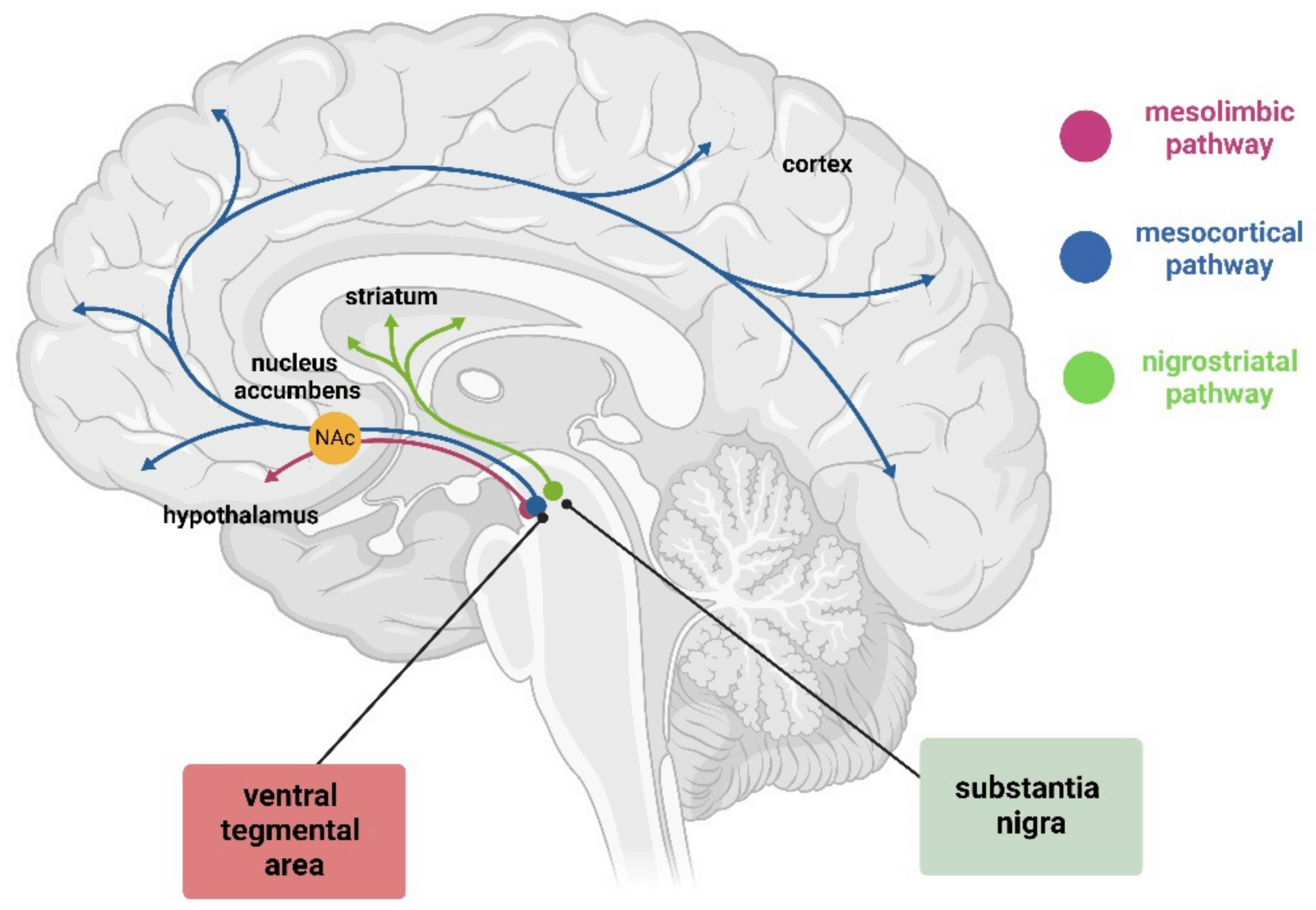
Dopamine is involved in:
- Reward & motivation
- Movement & motor control
- Learning & memory
- Mood & emotion
- Attention & decision-making
It is not the “pleasure molecule,” as commonly believed. Instead, it’s the “seeking” molecule—driving anticipation and action toward things the brain predicts will be rewarding.
III. How Dopamine Works in the Brain
The brain has specific dopamine pathways, each responsible for different functions:
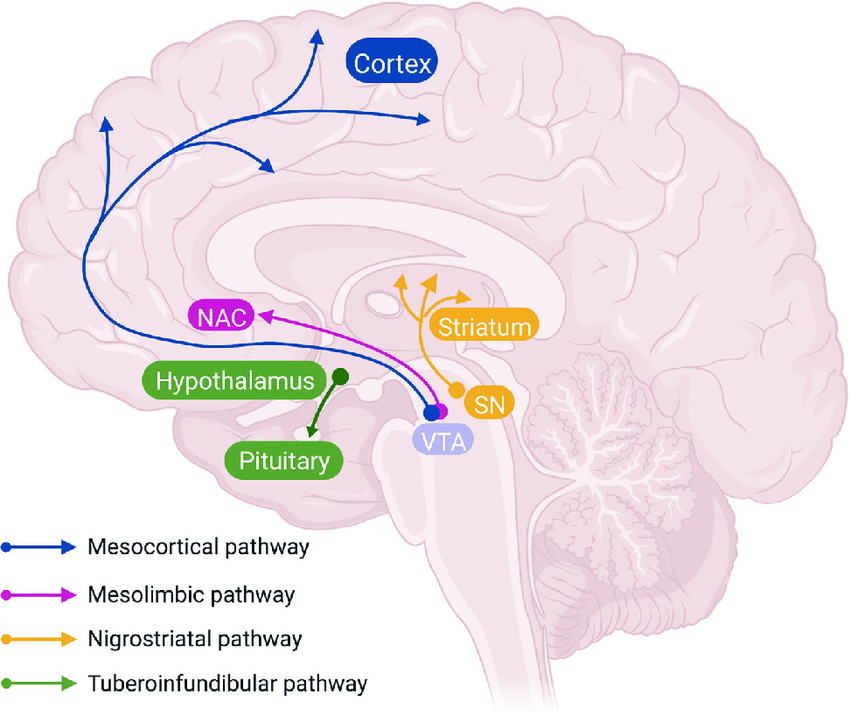
- Mesolimbic Pathway
→ Reward, motivation, reinforcement learning - Mesocortical Pathway
→ Planning, decision-making, Emotional regulation - Nigrostriatal Pathway
→ Movement and coordination - Tuberoinfundibular Pathway
→ Hormonal regulation
Key concept:
Dopamine release is driven by prediction errors—the difference between what we expect and what we get.
When outcomes exceed expectations, dopamine surges. When outcomes are worse than expected, dopamine dips. This mechanism is exploitable.
IV. Why Dopamine is So Powerful (and Vulnerable to Exploitation)
Dopamine is designed to help us survive by:
- Making us repeat actions that lead to food, safety, reproduction
- Helping us learn patterns and outcomes
- Encouraging habit formation
But in the modern world, where synthetic rewards (processed food, social validation, digital noise) are abundant, dopamine becomes easily hijacked.
Industries exploit this by:
- Creating stimuli that trigger dopamine more intensely and more frequently than natural rewards
- Bypassing slow, deliberate thinking with fast, rewarding loops
- Rewiring habits to benefit product engagement, not personal well-being
V. Consequences of Chronic Dopamine Hijacking
Over time, unnatural overstimulation leads to:
- Desensitization: The brain requires more stimulation to feel the same reward
- Compulsion: Users chase rewards even when harmful
- Reduced baseline dopamine: Everyday tasks feel dull or hard
- Low mood, poor concentration, burnout
This is the starting point for a productivity crisis, both personally and culturally.
VI. Impact on Personal & Professional Productivity
| Effect | Impact |
|---|---|
| Constant stimulation | Reduces boredom tolerance, needed for creative work |
| Dopamine fatigue | Makes long tasks feel harder and less motivating |
| Habit hijacking | Replaces goal-oriented actions with stimulus-seeking behavior |
| Fragmented attention | Encourages multitasking over deep focus |
| Impaired delay of gratification | Makes long-term projects feel unrewarding |
VII. Reclaiming Productivity: Practical Steps
Here’s how to begin reversing dopamine hijack and rebuilding authentic motivation:
1. Track Your Triggers
- Write down moments when you feel impulsively drawn to check, eat, buy, or scroll
- Ask: what was I trying to feel, avoid, or accomplish?
2. Balance Your Dopamine
- Include more “slow dopamine” activities: walking, reading, building something
- Avoid stacking: e.g., no ‘food + social media + video’ at once
3. Design Friction Into Dopamine Loops
- Log out of apps, turn off autoplay, delete shortcut icons
- Make high-dopamine behaviors less convenient
4. Rebuild Natural Rewards
- Start your day with a dopamine-neutral task (writing, stretching, walking)
- Celebrate progress on long-term goals, not just quick tasks
5. Practice Dopamine Fasting (Intelligently)
- Choose 2–4 hours a day for dopamine-reset activities: no screen, no sugar, no noise
- Reflect during this time to retrain your Reward System
Productivity Compass
| Triggered By | Exploited Through | Harms | Reclaim With |
|---|---|---|---|
| Reward Anticipation | Stimulus Overload (scroll, snacks, likes) | Low motivation, compulsive distractions | Natural reward rituals, Friction design |
Closing Reflection
Understanding dopamine is the first step toward reclaiming your time, focus, and attention span. This chemical doesn’t control you—but industries that understand it can.
In the rest of this series, we’ll uncover how specific sectors—from junk food to social media to education—exploit dopamine to influence your behavior. But we’ll also show you exactly how to resist, reset, and rebuild a productivity system that serves your goals—not theirs.

No Comments Yet